
Fantasy never really disappears, but every so often the industry reaches a moment where everything lines up. Audience appetite, studio confidence, and long-term storytelling all point in the same direction. Heading into 2026, that moment feels very real.
Studios and streamers are increasingly betting on fantasy worlds that are not designed to burn bright and vanish. Instead, they are being built to last. The emphasis has shifted away from one-off spectacle and toward layered universes that reward attention, memory, and patience. Viewers are no longer just watching stories. They are learning how worlds work, how rules bend, and what happens when characters push against those rules.
This is not accidental. The success of serialized storytelling across streaming platforms has taught the industry a clear lesson. Audiences will commit to complex mythology if the emotional stakes are grounded and the internal logic holds. Fantasy in 2026 is being treated less like genre entertainment and more like infrastructure. Worlds are being engineered with the expectation that people will live in them for years.
One of the clearest signals of this shift is how book-to-screen adaptations are being positioned. Adaptations are no longer sold as simple retellings. They are framed as expansions, deep dives, or parallel explorations of worlds that already exist. When a story has rules, history, and moral boundaries established on the page, studios see stability. Audiences sense that stability too, even if they can’t articulate it.
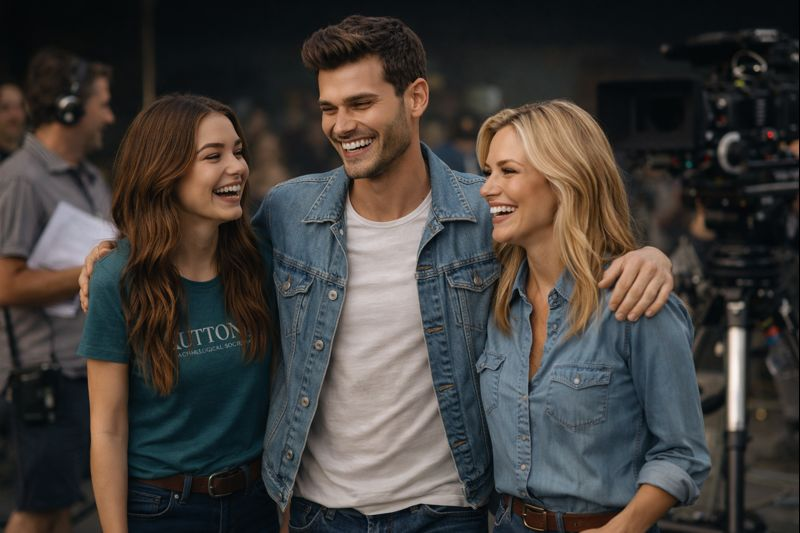
A strong example of this mindset is the continued expansion of well-established franchises through prequels and side narratives. These projects are not about explaining everything. They are about adding texture. They assume the audience is intelligent, curious, and willing to sit with ambiguity as long as the payoff feels earned. That assumption is shaping how fantasy stories are being written, marketed, and released.
This matters deeply for a project like Cryptic Park. At its core, the story isn’t just a supernatural thriller. It’s a world with rules that are only partially visible. There are systems operating behind everyday life, forces that observe without revealing themselves, and patterns that only make sense once you start paying attention. That is exactly the kind of storytelling modern fantasy audiences are responding to.
One of the biggest lessons coming out of current fantasy trends is the importance of consistency over explanation. Viewers do not need everything spelled out early. What they need is the sense that answers exist, even if they are being withheld. When a world behaves consistently under pressure, the audience trusts it. That trust buys time. It allows mysteries to breathe instead of collapsing under premature exposition.
Another key trend is how worldbuilding is revealed through stress. Modern fantasy rarely stops the story to explain itself. Instead, characters are placed in situations where the rules become unavoidable. Choices have consequences. Small anomalies ripple outward. What seems random starts to form patterns. This is where Cryptic Park shines. The story repeatedly places ordinary life next to something that should not exist, then lets the tension expose the fault lines beneath the surface.
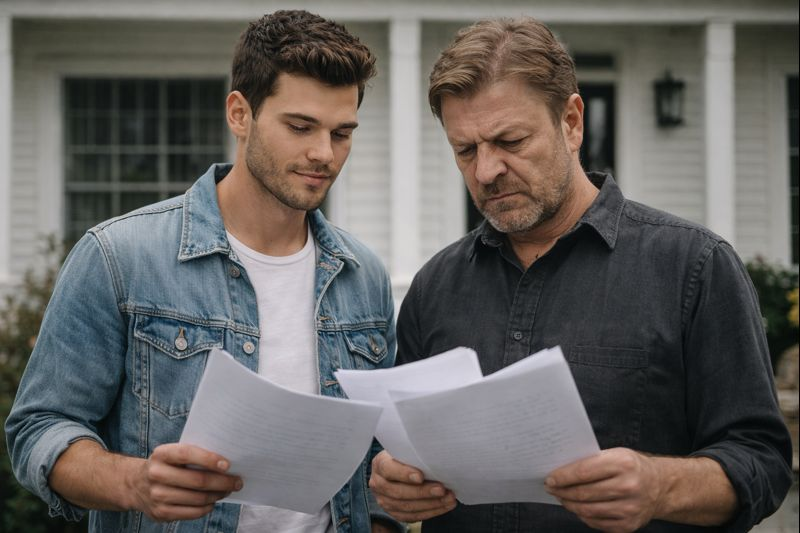
There is also a growing expectation that fantasy series are built for longevity. Writers are increasingly structuring stories with future seasons in mind, even when those seasons are not guaranteed. This doesn’t mean dragging things out. It means pacing revelations so they feel intentional rather than rushed. Cryptic Park already operates in this space by delaying certain truths and allowing investigation threads to develop slowly. In the current landscape, that restraint reads as confidence, not hesitation.
Perhaps the most important cultural shift is the audience’s desire for trackable threads. Viewers want symbols, recurring language, visual motifs, and narrative breadcrumbs they can follow and discuss. This is not just fandom culture. It’s Engagement Culture. Stories that give people something to notice give them something to return for. Cryptic Park’s use of recurring imagery, coded behavior, and layered surveillance naturally fits this model.
All of this makes now a smart time to talk about Cryptic Park publicly. Not by positioning it as the next massive franchise, but by placing it within a broader creative conversation. The conversation about worlds that feel lived in. About stories that respect attention. About mysteries that unfold instead of explode.
As the industry looks toward 2026, fantasy is no longer being treated as escapism alone. It is being treated as architecture. Carefully designed. Intentionally paced. Built to hold weight. Cryptic Park belongs in that conversation because it was never designed to rush. It was designed to endure.