
The intention is always reasonable. One streaming episode feels manageable. A single chapter provides entertainment without disrupting the rest of the evening. The time commitment appears limited. The expectation is control.
Streaming platforms quietly adjust that expectation. Episode endings rarely feel complete. Questions remain open. Character decisions create new uncertainty. Information is revealed at a pace that encourages continuation. Resolution is postponed just long enough to generate curiosity.
Curiosity extends engagement. Automatic playback removes interruption. The absence of transition time reduces reflection. The viewer is not required to make an active decision. The next segment begins without requiring renewed commitment.
Convenience reduces resistance. Story structure adapts to environment. Writers understand that viewers now experience multiple episodes in sequence rather than in isolation. Narrative rhythm shifts toward continuous progression rather than weekly closure.
Momentum replaces patience. Cliffhangers no longer function as long-term suspense devices. They function as immediate continuation triggers. Emotional tension carries directly into the next segment without delay.
Time becomes less noticeable when narrative continuity remains unbroken. Traditional television introduced interruption by necessity. Broadcast schedules created pauses that encouraged separation between episodes. That separation allowed interpretation, discussion, and anticipation to develop gradually.
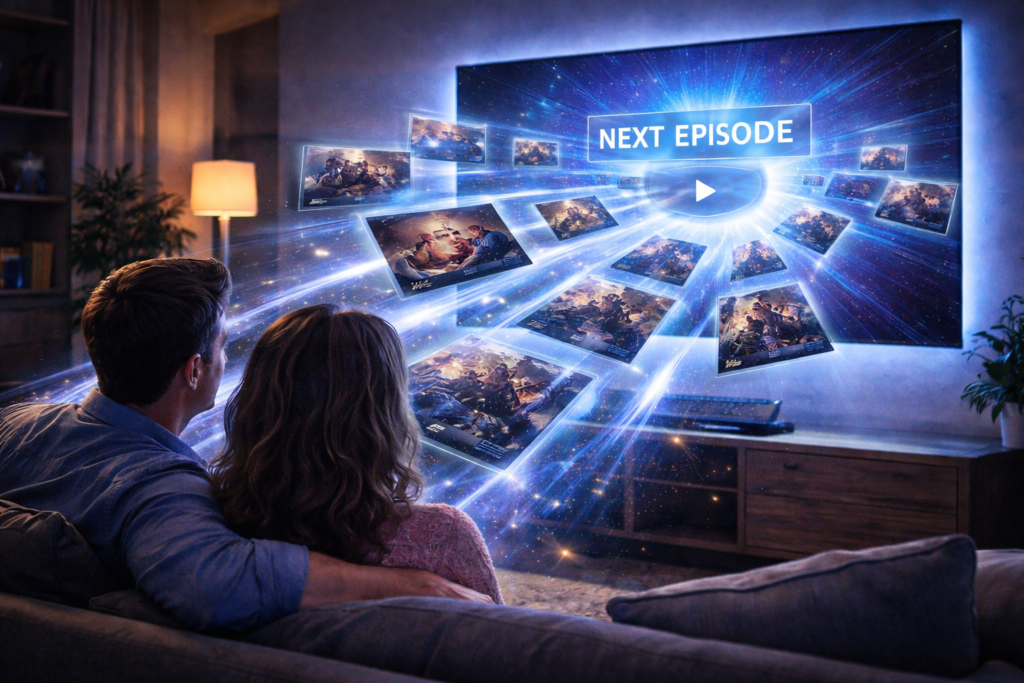
Streaming compresses that cycle. The distance between curiosity and resolution decreases significantly. The desire for answers overrides awareness of duration. Engagement becomes immersive because decision-making becomes passive.
Passive continuation creates extended viewing periods. Character-driven storytelling intensifies this effect. Emotional investment increases the perceived importance of outcome. Viewers do not simply observe events. They evaluate consequences. They anticipate reactions. They form expectations about development.
Expectation encourages persistence. Narrative design increasingly reflects behavioral observation. Writers introduce turning points near episode conclusions. Questions remain active rather than resolved. Information is layered gradually to sustain engagement across multiple segments.
Structure encourages continuity. The absence of interruption removes opportunities to reconsider time allocation. Without external stopping signals, internal discipline becomes the only limiting factor. Emotional involvement often overrides that discipline.
Immersion alters perception of time. Multiple episodes experienced consecutively create narrative coherence that feels natural rather than extended. The story maintains presence without requiring reorientation. Context remains fresh. Motivation remains clear.
Continuity strengthens the connection. Six hours feels disproportionate when measured abstractly. It feels consistent when experienced narratively. Each episode contributes incremental progression. Each progression justifies continuation.
Completion becomes a moving target. Streaming platforms do not force extended viewing. They remove the friction that once prevented it. The experience becomes shaped by ease of access rather than limitation of availability.
Availability changes behavior. What begins as a single episode becomes sustained engagement because narrative momentum remains uninterrupted. The viewer does not lose track of time.
The viewer loses track of separation. Separation once defined television consumption. Continuity now defines it.