
Cryptic Park didn’t begin as the ten-episode crime thriller it has become today. In the very beginning, it was a tight little screenplay. It could have been an hour-and-a-half movie with a clear beginning, middle, and end. Meg Riggs built the bones of it that way. She built a single ride with one sitting, a one-punch of a story.
Somewhere along the way, she decided to stop and take another look at it. She thought about what she really wanted this world to feel like. There was a trend rising where writers started to tell a full story across six to ten episodes.
Not the sitcom style where each episode starts with a clean slate. Friends, The Office, and The Big Bang Theory are stories that could go on forever. But at some point, the filmmakers, the decision makers, decided the story had been told, and they ended them before they dragged their feet into “getting old” territory. That’s not what Meg wanted.
She started thinking along the lines of The Sinner, The Queen’s Gambit, and Mare of Easttown. Different stories from different walks of life, but they each have something in common. The story begins and ends in the season. Each episode builds on the story instead of telling a different one, with some storylines continuing through.
After some long talks about pacing and character arcs, Meg made a huge choice. Cryptic Park may have started out as a screenplay, but it was going to be turned into a series because it needed a longer runway. It needed time to pull the viewer in and let the tension build. She knew she didn’t want to rush a story this layered.
At first, she planned an eight-episode series. It seemed to be about the right length. Along the way, a decision was made that the final episode would be written as an extra-long finale to fit all the reveals. But as the drafts came in, it became clear that everything was too tight. There were too many scenes being compressed. Too many details were being cut. The story desperately needed more room to breathe.
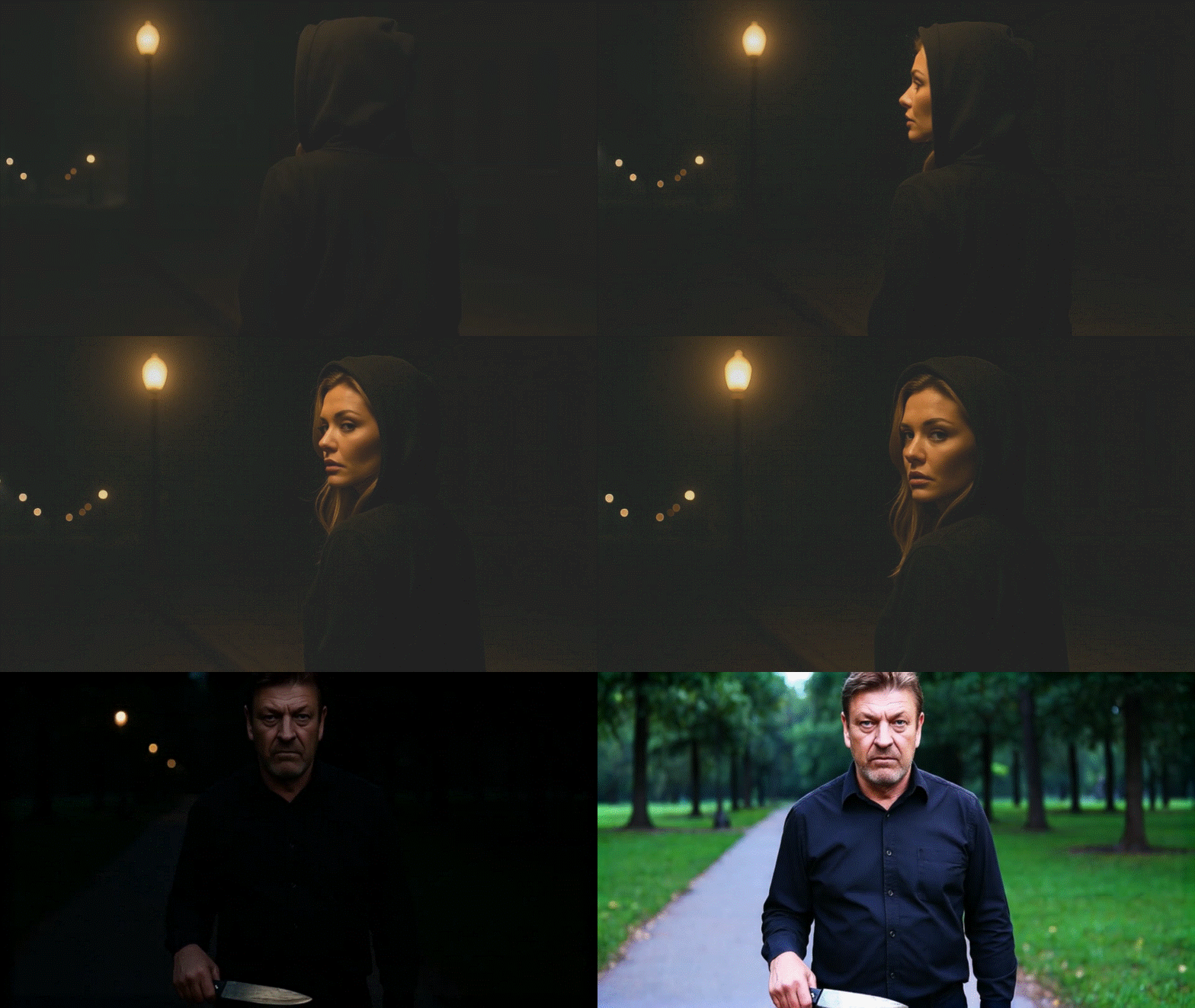
The writers went back to the drawing board and mapped it out as ten episodes. They started feeling better about the pace and the twists. They didn’t feel like anything was being rushed. And once they got rolling, it was like a new personality came out of the story. It took on a form it didn’t have before, but made it so much better.
Writing can be tedious work at times. It can feel like the rewriting and the constant rewriting is getting nowhere. But that’s the craft. That’s how great stories are made.
When Barry Levinson was making Rain Man in the late 1980s, he would often sit with Dustin Hoffman going over lines. They would change a word or a beat just to get it right. They went through line by line. When he saw what they were doing, Tom Cruise joined in because he saw the value in it. Every line was so important, no second of the film was supposed to be wasted. They literally rewrote and rewrote every part of the screenplay to make the best movie they could, which the studio was about to lose interest in, and it won four Academy Awards as well as two Golden Globes, along with a slew of others, for how magnificent a piece they created.
That was the kind of story Meg wanted to tell with Cryptic Park. One that stays with you when the credits roll at the end. So, it comes down to the big question. Do you want to tell a story? Or do you want to tell a memorable story that takes the viewers’ breath away?